- Research-Grade Peptides · 18+ Only · For Laboratory Use Only

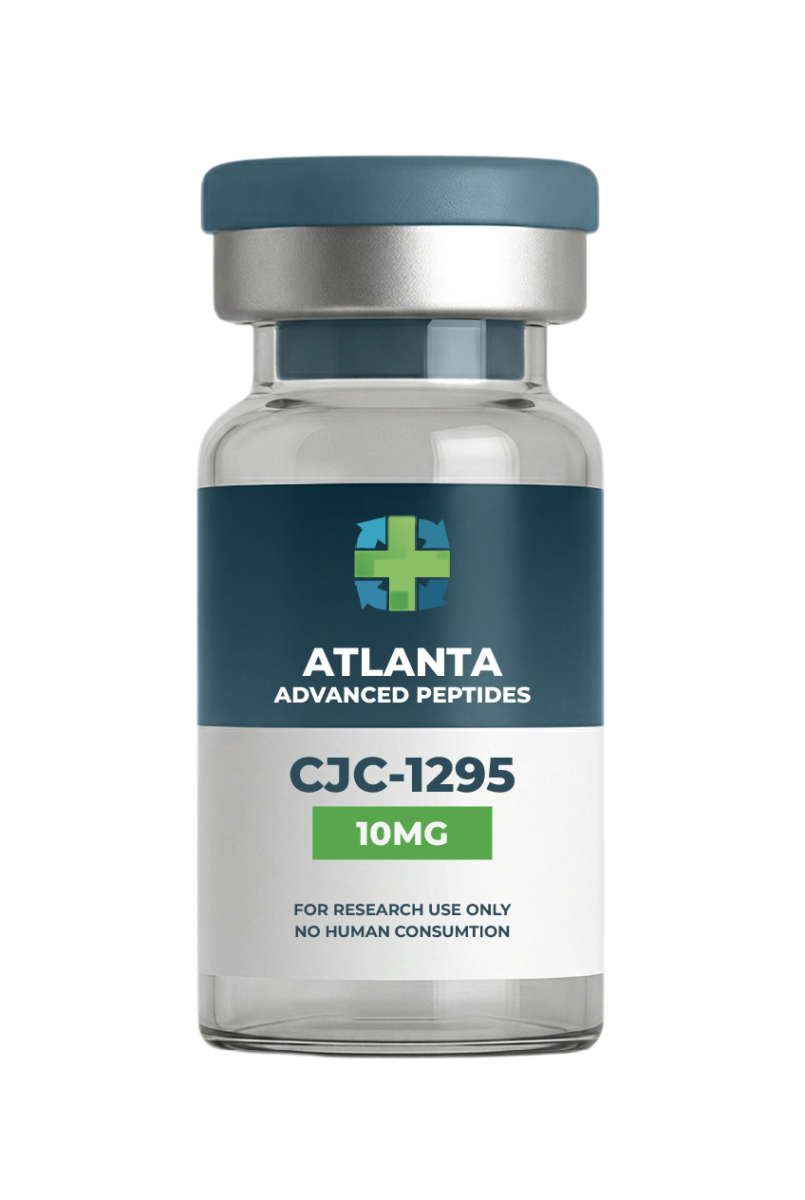
CJC 1295 W O DAC Ipamorelin 5mg Research Blend
-
Form: Lyophilized powder
-
Unit Size: 10mg total (5mg CJC-1295 w/o DAC + 5mg Ipamorelin per vial)
-
Storage: Store lyophilized at –20°C. After reconstitution, refrigerate at 2–8°C.
$99.99 Original price was: $99.99.$79.99Current price is: $79.99.
Description
What is CJC-1295 Without DAC / Ipamorelin?
This product is a pre-formulated CJC-1295 Ipamorelin research blend containing 5mg of CJC-1295 without DAC and 5mg of Ipamorelin in a single lyophilized vial — the most widely studied dual-pathway growth hormone secretagogue combination in the peptide research literature. Before getting into what the research says, it is worth explaining the two compounds individually and why the “without DAC” designation matters — because it is a question that comes up constantly in GH axis research discussions and it is one where clarity saves researchers from sourcing the wrong compound.
CJC-1295 without DAC is a modified GHRH (Growth Hormone Releasing Hormone) analog. It stimulates growth hormone release through the GHRH receptor on pituitary somatotroph cells. Ipamorelin stimulates growth hormone release through the ghrelin receptor (GHS-R1a) — an entirely different receptor system. Two compounds, two different receptor pathways, both converging on the same biological outcome in laboratory models. That dual-pathway mechanism is precisely why this cjc-1295 ipamorelin research blend has accumulated such a consistent body of published scientific investigation.
Understanding CJC-1295 Without DAC — The DAC Question Explained
The distinction between CJC-1295 with DAC and cjc1295 dac free research peptide is one of the most misunderstood aspects of GHRH analog research, and it directly affects experimental design. It is worth being direct about this.
DAC stands for Drug Affinity Complex — a lysine-maleimide modification that allows CJC-1295 to bind covalently to serum albumin in biological systems, dramatically extending its half-life from minutes to days. CJC-1295 with DAC was designed for sustained, long-acting GH stimulation in research models. CJC-1295 without DAC — also referred to as Modified GRF(1-29) or Mod GRF 1-29 in some research literature — has a much shorter active window, producing more pulsatile GH release patterns in laboratory models that more closely mimic the natural physiological rhythm of GH secretion.
For researchers designing protocols around pulsatile GH secretion patterns or studying natural GH pulse biology, the DAC-free version is the appropriate research tool. For studies requiring sustained, prolonged GH stimulation, the DAC version serves a different experimental purpose. The blend supplied here uses cjc1295 dac free research peptide — this distinction should be noted clearly in any research documentation.
Blend Composition and Specifications
| Specification | Detail |
|---|---|
| Compound 1 | CJC-1295 without DAC (Modified GRF 1-29) — 5mg |
| Compound 2 | Ipamorelin — 5mg |
| Total Blend Weight | 10mg (5mg + 5mg) |
| CJC-1295 Molecular Weight | 3367.97 g/mol |
| Ipamorelin Molecular Weight | 711.85 g/mol |
| Form | Lyophilized powder |
| Purity | ≥ 99% per compound |
| Storage | Store at -20°C, away from light and moisture |
| Reconstitution | Bacteriostatic water recommended |
| Research Use | In-vitro and in-vivo laboratory research only |
Why These Two Compounds Together — The Science Behind the Pairing
The reason the buy CJC-1295 Ipamorelin combination appears so consistently in published GH axis research is not arbitrary. It comes down to receptor synergy. Growth hormone secretion from pituitary somatotrophs is regulated by two opposing systems — GHRH receptor stimulation promotes GH release, while somatostatin inhibits it. GHRP compounds like Ipamorelin work partly by suppressing somatostatin signalling at the pituitary level, while simultaneously stimulating GHS-R1a. CJC-1295 without DAC directly stimulates GHRH receptors.
When both compounds are present simultaneously in laboratory models, published research has documented that the combined GH response is significantly greater than the additive effect of each compound administered alone. This synergistic amplification of GH pulse amplitude — without triggering the cortisol or prolactin side effects seen with older GHRPs — is what makes this pairing the reference standard for dual-pathway GH secretagogue research. The published literature on this combination is more extensive than for either compound used independently, which is a meaningful statement about how consistently researchers have found value in studying them together.
CJC-1295 / Ipamorelin in Scientific Research
The individual and combined research profiles of the compounds in this CJC-1295 Ipamorelin research blend span several decades of published investigation. Here is an overview of the key research areas documented in peer-reviewed literature under controlled laboratory conditions.
Growth Hormone Axis and Pituitary Biology Research
The foundational research context for this blend is pituitary somatotroph biology. Published laboratory studies have examined how simultaneous GHRH receptor and GHS-R1a engagement amplifies GH pulse amplitude in animal research models, with in-vitro studies exploring the intracellular signalling cascades — particularly cAMP and IP3 pathway interactions — that underlie the synergistic GH response. This area of cjc1295 dac free research peptide investigation is the most consistently published aspect of the combination’s scientific record and the primary reason researchers source them together rather than separately.
IGF-1 and Downstream Metabolic Signalling Research
Growth hormone’s downstream signalling through IGF-1 (Insulin-Like Growth Factor 1) has made this blend relevant to metabolic and anabolic biology research beyond the pituitary. Published in-vivo studies have examined how GH pulse amplitude changes — produced by the CJC-1295/Ipamorelin combination — influence hepatic IGF-1 production and downstream IGF-1 receptor signalling in animal research models. This area of investigation connects GH secretagogue research to broader metabolic biology and protein synthesis pathway studies in laboratory environments.
Bone and Skeletal Biology Research
Published laboratory research has examined how elevated GH pulse patterns produced by GHRH/GHRP combinations influence bone biology in animal research models. Studies have investigated osteoblast activity, bone mineral density signalling, and skeletal growth plate biology in controlled in-vivo environments. CJC-1295 and Ipamorelin have both been independently referenced in bone biology research contexts, and their combination provides researchers with a tool for producing more robust GH stimulation in skeletal biology studies than either compound achieves alone.
Body Composition and Adipose Tissue Research Models
The relationship between GH pulse patterns and body composition biology — specifically adipose tissue lipolysis signalling and lean tissue metabolism — has made this CJC-1295 Ipamorelin research blend relevant to body composition research in laboratory settings. Published in-vivo studies have examined how amplified GH pulses influence adipocyte biology, lipid metabolism signalling, and fat oxidation pathway regulation in animal research models. This area of investigation connects the GH axis research to metabolic biology and is an active area of published scientific investigation.
Sleep Architecture and GH Pulse Research
Growth hormone secretion has a well-documented relationship with sleep architecture — the largest GH pulse in most species occurs shortly after sleep onset, driven by slow-wave sleep. Published laboratory research has examined GH secretagogue compounds in sleep biology research contexts, investigating how GHRH receptor stimulation interacts with sleep-associated GH pulse patterns in controlled animal research models. This is a more specialised area of the published literature but represents a genuine and documented research application for compounds in this class.
Research Disclaimer: All research references above relate exclusively to published scientific literature and controlled laboratory investigations. CJC-1295 / Ipamorelin blend supplied by Atlanta Advanced Peptides is for research use only and is not approved for human or veterinary application under any circumstances.
Pre-Formulated Blend vs Sourcing Separately
Researchers sometimes ask whether it makes more sense to source CJC-1295 and Ipamorelin as separate compounds rather than as a pre-formulated blend. The honest answer depends on your protocol. If your research design uses the same 1:1 ratio consistently across all sessions and you want to simplify reconstitution — one vial, one calculation — this blend is the more practical option. If your protocol requires variable ratios between the two compounds at different experimental timepoints, sourcing Ipamorelin separately gives you the flexibility to adjust concentrations independently. Both options are available at Atlanta Advanced Peptides at ≥99% purity.
Ordering CJC-1295 / Ipamorelin Blend
To buy CJC-1295 Ipamorelin blend from Atlanta Advanced Peptides, add the product to your cart and complete checkout through our secure encrypted payment gateway. Orders are processed Monday through Friday during standard business hours, and all shipments go out via USPS Ground Advantage or USPS Priority Mail with full tracking provided by email.
All purchases are made with the explicit understanding that:
- The purchaser is 18 years of age or older
- The compound will be used solely for legitimate in-vitro or in-vivo laboratory research
- The product will not be used for human or veterinary purposes under any circumstances
Reconstitution Guidelines for Research Use
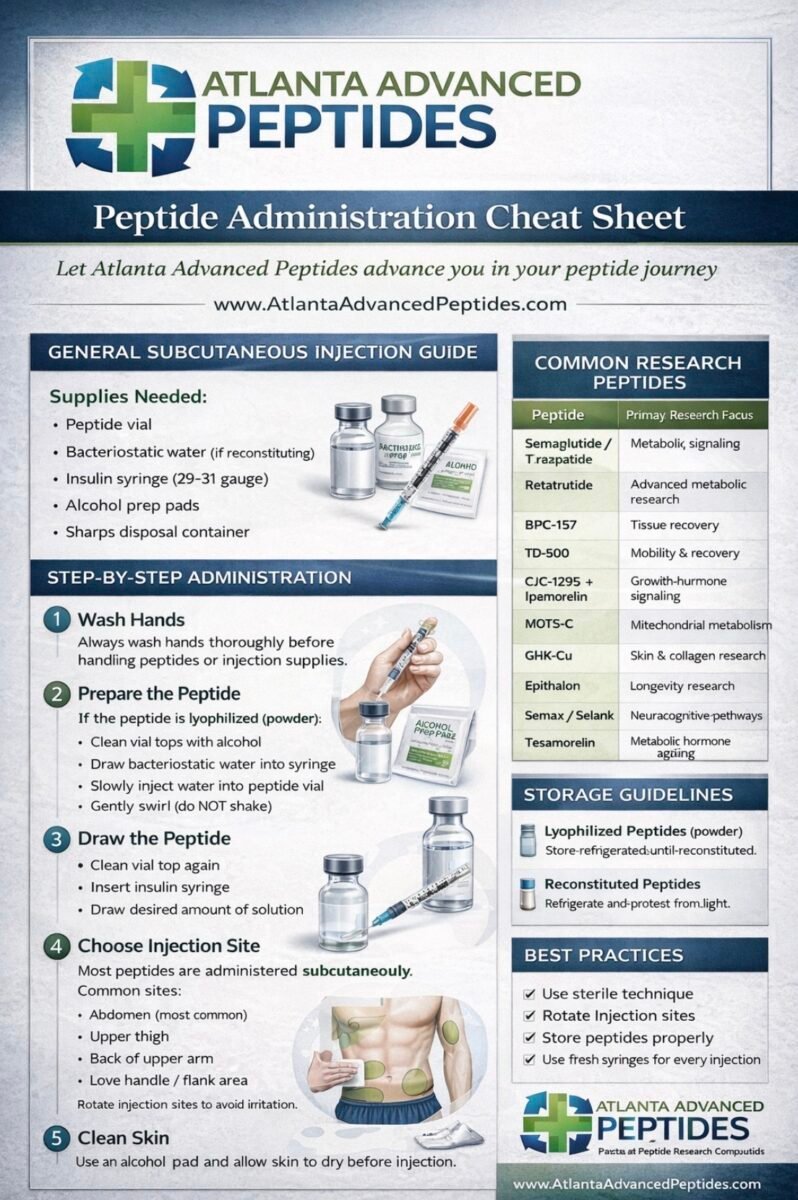
The CJC-1295 / Ipamorelin blend is supplied as a lyophilized powder. Both compounds are compatible with bacteriostatic water as the reconstitution solvent. Inject solvent slowly down the inner wall of the vial without shaking vigorously, store reconstituted compound refrigerated at 2–8°C, and apply standard laboratory PPE and sterile technique throughout all handling steps.
Related Research Compounds
Researchers working with the CJC-1295 / Ipamorelin blend frequently reference these related compounds in their laboratory studies:
- Ipamorelin 10mg — available as a standalone compound for protocols requiring independent GHS-R1a research or variable-ratio study designs
- Tesamorelin 10mg — a separate GHRH analog with its own published research profile, offering a different GHRH receptor agonist research option alongside or instead of CJC-1295
- MOTS-c 10mg — mitochondrial-derived peptide referenced in metabolic and body composition research contexts alongside GH secretagogue compounds
- NAD+ 500mg — cellular metabolism and energy pathway compound studied in research contexts that overlap with GH axis biology investigation
- Bacteriostatic Water 10ml — recommended reconstitution solvent for laboratory use
Research Disclaimer
⚠️ For Laboratory Research Use Only
CJC-1295 / Ipamorelin blend supplied by Atlanta Advanced Peptides is intended strictly for in-vitro and in-vivo scientific research conducted by qualified researchers in controlled laboratory environments. This compound is not approved for human consumption, veterinary use, or any clinical application whatsoever. It is not classified as a drug, supplement, food product, or therapeutic agent. All purchasers must be 18 years of age or older. By completing a purchase, the buyer explicitly confirms that this compound will be used solely for legitimate scientific research purposes and in full compliance with all applicable local, state, and federal laws and regulations.
Additional information
| Weight | 0.2 lbs |
|---|---|
| Unit Size | 10mg Total |
| Blend Ratio | 5mg + 5mg |
| Form | Lyophilized powder |
you may also like...
- Research use only