- Research-Grade Peptides · 18+ Only · For Laboratory Use Only

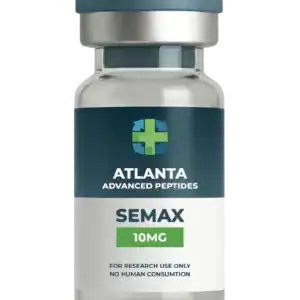
Semax
This product is supplied strictly for laboratory research use only.
Not intended for human consumption.
$39.99
Description
What is Semax?
Semax is a synthetic heptapeptide analog derived from the N-terminal fragment of ACTH (Adrenocorticotropic Hormone) — specifically the 4-10 fragment — with modifications that extend its stability in laboratory conditions compared to the parent peptide. Its origin is unusual among research compounds: Semax was developed in the Soviet Union in the 1980s at the Institute of Molecular Genetics of the Russian Academy of Sciences, specifically for its neurological research applications. That background distinguishes it from most compounds in the peptide research catalog, which emerged primarily from Western academic or pharmaceutical research pipelines.
Researchers looking to buy Semax research peptide will find a compound with one of the most focused and consistent neurological research profiles in the peptide literature. Unlike broader-spectrum compounds such as BPC-157 — which spans gastrointestinal, musculoskeletal, and neurological research domains — Semax’s published literature is almost entirely concentrated in CNS biology, BDNF signaling, and neuroprotective pathway research. For laboratories working specifically in cognitive neuroscience or neurological biology, that focused profile is exactly what makes it a relevant research tool. Supplied by Atlanta Advanced Peptides exclusively for in-vitro and in-vivo scientific research. Not for human or veterinary use.
Semax Compound Specifications
| Specification | Detail |
|---|---|
| Common Name | Semax |
| Full Name | ACTH(4-10) Heptapeptide Analog |
| Sequence | Met-Glu-His-Phe-Pro-Gly-Pro |
| Molecular Formula | C₃₇H₅₁N₉O₁₀S |
| Molecular Weight | 813.93 g/mol |
| Form | Lyophilized powder |
| Purity | ≥ 99% |
| CAS Number | 80714-61-0 |
| Storage | Store at -20°C, away from light and moisture |
| Reconstitution | Bacteriostatic water recommended |
| Research Use | In-vitro and in-vivo laboratory research only |
The Research Behind Semax — What the Published Literature Actually Says
Semax occupies a unique position in the semax nootropic compound research landscape because its scientific literature comes predominantly from Russian and Eastern European research institutions — a body of published work that Western researchers sometimes overlook simply because much of it was not originally published in English-language journals. That literature gap is worth acknowledging, because it does not reflect a gap in the research itself. Below is an honest overview of what the published scientific record documents about Semax in controlled laboratory conditions.
BDNF Signaling and Neurotrophic Research
The most consistently documented finding in Semax peptide research published literature is its interaction with Brain-Derived Neurotrophic Factor (BDNF) signaling pathways. In-vitro and in-vivo laboratory studies have examined how Semax influences BDNF expression in hippocampal and cortical cell models, with published research documenting upregulation of BDNF and its receptor TrkB in controlled neurological research environments. BDNF is one of the most important signaling proteins in CNS biology — involved in neuronal survival, synaptic plasticity, and learning and memory pathway research models — which is why this particular finding has driven sustained interest in Semax as a neurological research compound.
Dopaminergic and Serotonergic Pathway Research
Published laboratory studies have examined Semax’s interaction with dopaminergic signaling systems in animal research models. Research has documented effects on dopamine receptor expression, dopamine metabolism pathways, and catecholamine turnover in controlled in-vivo environments. Serotonergic pathway interactions have also been investigated in published studies, with laboratory models exploring Semax’s influence on serotonin receptor expression and serotonin transporter activity in CNS tissue research models. These published findings are part of why Semax is frequently referenced in the semax nootropic compound research literature — its dopaminergic and serotonergic interactions are among its most studied biological characteristics.
Neuroprotective Research Models
A substantial portion of the published Semax literature involves neuroprotective research — specifically how the compound behaves in laboratory models designed to study neuronal resilience under stress conditions. Published in-vivo studies have examined Semax in ischemia research models, oxidative stress environments, and excitotoxicity pathway investigations in controlled laboratory settings. Several published studies from Russian research institutions have documented Semax’s interaction with inflammatory signaling in CNS tissue models, including its effects on cytokine expression and microglial activation pathways in controlled neuroinflammation research environments.
Cognitive Biology and Memory Research Models
Semax’s derivation from the ACTH 4-10 fragment is directly relevant to its cognitive biology research profile. The ACTH 4-10 sequence has been investigated in cognitive research since the 1970s, with published studies examining its influence on attention, memory consolidation, and learning pathway models in controlled animal research environments. Semax — as a more stable synthetic analog of this sequence — has been investigated in similar cognitive biology contexts, with published laboratory research examining its interaction with hippocampal memory pathway models, cholinergic signaling, and attention-related neurotransmitter systems. This area of published investigation is the primary basis for its classification as a semax nootropic compound in the research literature.
Vascular and Cerebrovascular Research
A notable subset of published Semax research — particularly from Eastern European institutions — has examined its interaction with cerebrovascular biology in laboratory models. Published studies have investigated Semax’s influence on cerebral blood flow regulation models, endothelial function in CNS vascular tissue, and oxidative stress pathways in ischemia research environments. This area of the Semax literature is less referenced in Western research discussions but represents a meaningful body of published in-vivo investigation that serious researchers in cerebrovascular biology should be aware of.
Research Disclaimer: All research references above relate exclusively to published scientific literature and controlled laboratory investigations. Semax supplied by Atlanta Advanced Peptides is for research use only and is not approved for human or veterinary application under any circumstances.
A Note on Sourcing Semax for Research
Because Semax originated from Russian research rather than a Western pharmaceutical pipeline, the quality of available research-grade material varies considerably across suppliers. Purity matters enormously when working with neuropeptide research compounds — impurities or degraded peptide content introduce confounding variables into neurological research models that are already complex to interpret cleanly. Atlanta Advanced Peptides supplies Semax at ≥99% purity, lyophilized for stability, and prepared to the same standard as every other compound in our catalog. If you are looking to buy Semax research peptide from a USA-based supplier with consistent quality standards, that is what we offer.
Ordering Semax
Semax ships via USPS Ground Advantage or USPS Priority Mail to research facilities across the USA. Orders are processed Monday through Friday during standard business hours and full tracking is provided with every shipment. Checkout is fully encrypted.
All purchases are made with the explicit understanding that:
- The purchaser is 18 years of age or older
- The compound will be used solely for legitimate in-vitro or in-vivo laboratory research
- The product will not be used for human or veterinary purposes under any circumstances
Reconstitution Guidelines for Research Use
Semax is supplied as a lyophilized powder and requires reconstitution before use in laboratory protocols. It is compatible with bacteriostatic water as the reconstitution solvent. Inject solvent slowly down the inner wall of the vial without shaking vigorously, store reconstituted compound refrigerated at 2–8°C, and apply standard laboratory PPE and sterile technique throughout all handling steps.
Related Research Compounds
Researchers working with Semax in neurological and CNS biology studies may also find these compounds relevant:
- BPC-157 — referenced in neurological research contexts alongside Semax, particularly in neuroprotective pathway and dopaminergic signaling investigations
- MOTS-c 10mg — mitochondrial-derived peptide studied in cellular energy and metabolic regulation research, referenced in CNS biology contexts
- NAD+ 500mg — nicotinamide adenine dinucleotide compound with well-documented involvement in neurological and cellular energy research models
- GHK-Cu 50mg — copper peptide compound investigated in neurological and neuroprotective research contexts alongside Semax in published literature
- Bacteriostatic Water 10ml — recommended reconstitution solvent for laboratory use
Research Disclaimer
⚠️ For Laboratory Research Use Only
Semax supplied by Atlanta Advanced Peptides is intended strictly for in-vitro and in-vivo scientific research conducted by qualified researchers in controlled laboratory environments. This compound is not approved for human consumption, veterinary use, or any clinical application whatsoever. It is not classified as a drug, supplement, food product, or therapeutic agent. All purchasers must be 18 years of age or older. By completing a purchase, the buyer explicitly confirms that this compound will be used solely for legitimate scientific research purposes and in full compliance with all applicable local, state, and federal laws and regulations.
Additional information
| Weight | 0.2 lbs |
|---|
you may also like...
- Research use only
- Research use only