- Research-Grade Peptides · 18+ Only · For Laboratory Use Only

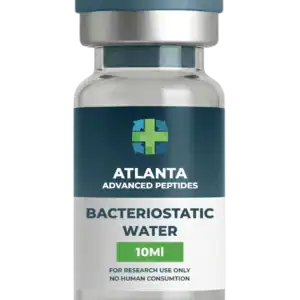
Bacteriostatic Water 10ml
-
Volume: 10ml Sterile Vial
-
Ingredients: Sterile Water for Injection, 0.9% Benzyl Alcohol
-
Shelf Life: Up to 24 months (Unopened)
-
Bulk Savings: * Buy 3-5 vials: Get 10% OFF
-
Buy 6+ vials: Get 15% OFF
-
$9.50
Description
What is Bacteriostatic Water?
Bacteriostatic water is sterile water for injection containing 0.9% benzyl alcohol as a preservative. The benzyl alcohol does one specific job — it inhibits the growth of bacteria in the solution after the vial has been opened and punctured with a needle. That distinction matters enormously in laboratory settings: a standard sterile water vial becomes contaminated the moment it is accessed, which means it should only be used once. A bacteriostatic water 10ml research vial can be accessed multiple times over an extended period because the benzyl alcohol preservative maintains its sterility between uses.
For researchers working with lyophilized peptide compounds — which describes virtually every product in the Atlanta Advanced Peptides catalog — bac water 10ml vial is the standard reconstitution solvent. It is compatible with the vast majority of peptide compounds, it extends the usable life of reconstituted solutions compared to plain sterile water, and it is the solvent referenced in the reconstitution guidelines for compounds including BPC-157, TB-500, Ipamorelin, and every other lyophilized compound we supply. If you are ordering peptides for the first time and are unsure whether to add this to your order — add it. You will need it.
Product Specifications
| Specification | Detail |
|---|---|
| Contents | Sterile water for injection + 0.9% benzyl alcohol |
| Volume | 10ml per vial |
| Benzyl Alcohol Concentration | 0.9% (9mg/ml) |
| pH | Approximately 5.7 |
| Appearance | Clear, colourless solution |
| Vial Type | Multi-use vial with rubber stopper |
| Storage | Store at room temperature, away from light. Refrigerate after first use. |
| Use | Peptide reconstitution for laboratory research |
Why Bacteriostatic Water — Not Just Any Water
This is the question researchers new to peptide reconstitution ask most often, and it deserves a direct answer. The short version: the type of water you use for reconstitution directly affects compound stability, solution shelf life, and experimental reproducibility. Here is what the practical differences actually are.
Bacteriostatic Water vs Sterile Water for Injection
Plain sterile water for injection is exactly what it sounds like — purified, sterile water with no additives. It is appropriate for single-use reconstitution where the entire vial will be used immediately in one experimental session. The problem is that most laboratory protocols require multiple uses from a single reconstituted peptide vial over days or weeks. Without a preservative, bacterial contamination becomes a real risk after the first needle puncture. Bacteriostatic water solves this with 0.9% benzyl alcohol — the same approach used in multi-dose pharmaceutical vials for decades. For peptide research where a single reconstituted vial serves multiple experimental timepoints, bacteriostatic water 10ml research grade is the correct choice.
Bacteriostatic Water vs Tap Water or Distilled Water
Never use tap water or standard distilled water for peptide reconstitution. Both contain dissolved minerals, potential contaminants, and variable pH that can degrade sensitive peptide compounds or introduce variables into research data. The consistent, defined composition of bacteriostatic water — sterile, pH-controlled, preservative-containing — is exactly what makes it the standard reconstitution solvent in peptide laboratory research.
Bacteriostatic Water vs Normal Saline (0.9% NaCl)
Normal saline is sometimes used as an alternative reconstitution solvent and is compatible with some peptide compounds. However, the sodium chloride in saline can cause precipitation with certain peptides depending on their charge and solubility profile. Bacteriostatic water is the more universally compatible reconstitution solvent across the range of lyophilized peptide compounds in laboratory research settings. Unless a specific compound’s reconstitution protocol explicitly recommends saline, bacteriostatic water is the safer default.
How to Reconstitute Lyophilized Peptides — Practical Guidance
Proper reconstitution technique matters for compound integrity. This guidance is provided for laboratory reference — it applies to every lyophilized peptide compound in the Atlanta Advanced Peptides catalog.
Step One — Calculate Your Target Concentration
Before touching the vial, calculate how much buy bacteriostatic water peptide reconstitution solvent you need to reach your target concentration. For example, adding 2ml of bacteriostatic water to a 10mg peptide vial gives you a 5mg/ml solution. Adding 1ml gives you 10mg/ml. Have this calculation done before you start — changing solvent volume partway through is a common reconstitution error that wastes compound.
Step Two — Let the Peptide Vial Reach Room Temperature
Peptide vials stored at -20°C should be allowed to reach room temperature before reconstitution. Injecting cold solvent into a frozen lyophilized peptide cake can cause incomplete dissolution and mechanical disruption of the peptide structure. A few minutes at room temperature before opening is sufficient.
Step Three — Inject Solvent Slowly Down the Vial Wall
Draw your calculated volume of bacteriostatic water into a syringe and insert the needle through the rubber stopper of the peptide vial. Direct the stream of liquid slowly down the inner wall of the vial — do not aim directly at the lyophilized peptide cake and do not inject forcefully. Aggressive injection can shear or degrade sensitive peptide structures. Let the liquid run gently down the wall and allow the peptide to dissolve at its own rate.
Step Four — Do Not Shake
This is the most commonly ignored instruction in peptide reconstitution and one of the most consequential. Shaking a peptide vial after reconstitution introduces air bubbles into the solution and can cause mechanical agitation that degrades compound integrity — particularly for larger, more fragile peptides. If the lyophilized cake does not dissolve immediately, gently roll the vial between your palms or leave it at room temperature for a few additional minutes. Never vortex or shake vigorously.
Step Five — Store Correctly After Reconstitution
Once reconstituted, peptide solutions should be stored refrigerated at 2–8°C — not refrozen unless your specific compound’s guidelines indicate freeze-thaw stability. The benzyl alcohol in bacteriostatic water maintains sterility for extended periods, but peptide compound stability in solution varies by compound. As a general guideline, most reconstituted lyophilized peptides used in research are stable refrigerated for 2–4 weeks, though compound-specific storage data from published literature should always be consulted for your specific protocol.
How Much Bacteriostatic Water Do You Need?
A practical question researchers often overlook when ordering. A single 10ml bac water 10ml vial contains enough solvent to reconstitute multiple peptide vials — the exact number depends on how much solvent you use per vial. If you are using 2ml per peptide vial, one 10ml bacteriostatic water vial reconstitutes five peptide vials. If your protocol uses 1ml per vial, you can reconstitute ten. For researchers running multi-compound protocols or extended study designs with multiple vials, ordering two bacteriostatic water vials alongside your peptide compounds prevents mid-study supply interruptions that can compromise experimental continuity.
Ordering Bacteriostatic Water
To buy bacteriostatic water peptide reconstitution supply from Atlanta Advanced Peptides, simply add to cart and complete checkout. Bacteriostatic water ships with all peptide orders via USPS Ground Advantage or USPS Priority Mail. Orders processed Monday through Friday with full tracking provided.
Compounds That Require Bacteriostatic Water for Reconstitution
Every lyophilized compound in the Atlanta Advanced Peptides catalog is compatible with bacteriostatic water as the reconstitution solvent. The most commonly ordered compounds alongside this product include:
- BPC-157 and BPC-157 10mg
- TB-500 (Thymosin Beta-4)
- GHK-Cu 50mg
- Ipamorelin 10mg
- CJC-1295 / Ipamorelin Blend
- Tesamorelin 10mg
- MOTS-c 10mg
- Semax
- NAD+ 500mg
- KLOW 80mg and Wolverine 70mg blend products
- All GLP family compounds including GLP-1 SM, GLP-2 TRZ, and GLP-3 RT
Research Disclaimer
⚠️ For Laboratory Research Use Only
Bacteriostatic water supplied by Atlanta Advanced Peptides is intended for use as a reconstitution solvent in controlled laboratory research environments. This product is not approved for human injection, veterinary use, or any clinical application. All purchasers must be 18 years of age or older. By completing a purchase, the buyer confirms that this product will be used solely within legitimate laboratory research protocols in compliance with all applicable laws and regulations.
Additional information
| Weight | 0.6 lbs |
|---|---|
| Volume | 10ml |
| Preservative | 0.9% Benzyl Alcohol |
| pH | 4.5-7.0 |
| Shelf Life (Unopened) | Up to 24 months under proper storage conditions |